
Thanjavur (or Tanjore as the British called it) is a small town in Tamil Nadu with a massive cultural legacy. Thanjavur was the capital of the mighty Chola empire which at its peak extended to present day Indonesia, Sri Lanka and Maldives. Brihadishvara temple was built between 1003 and 1010 during the reign of Raja Raja Chola who apart from being a supreme ruler, was a true patron of art and architecture. The Brihadishvara temple is considered a paragon of Dravidian architecture that went on to inspire the design of temples in South India for over a millennium now. After the Cholas, the Pandayas, Nayaks and Marathas have also contributed to the temple at the later stages which reflects in the architecture which is an amalgamation of different art forms typical to the epochs during which they were added.
While the Brihadishvara temple or the ‘Big Temple’ as some refer to it, remains the cynosure, there are other art forms that have survived the test of time and add to the cultural hodgepodge of Thanjavur. Some of these art forms like the Netti works, the Tanjore painting and the Tanjore art plate have made it to the exclusive list of GI tagged handicrafts.

I went to Thanjavur in March which is one of the best times to visit anywhere in South India. There aren’t many buses directly to Thanjavur from Bangalore, so people usually board the Trichy bus, spend a day visiting the Ranganathswamy temple at Srirangam which is nearby and then proceed to Thanjavur. That was my initial plan as well but I later dropped Srirangam in favour of Chidambaram. I modified the itinerary mostly to add accommodate a trip to the Pichavaram mangrove forest which would have added a disparate flavour to my trip.
I reached Thanjavur around 7:30 AM. The first task was to find a decent place somewhere in the vicinity of the temple. I found one in the market area in front of the temple, a small room with a functional AC – just about perfect for me. A small nap, quick shower, masala dosa and a cup of coffee; I was all set for a long day and exciting day.
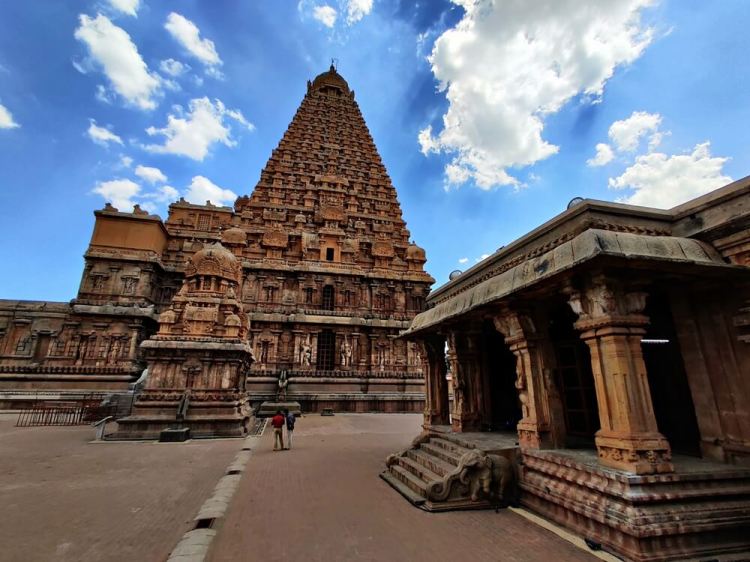
The Brihadishvara Temple
The first thing that struck me apart from the mammoth gopurams is the design of the temple. It is built more like a fort with moats and concentric ramparts. On entering there is a huge gopuram called the Keralantakan Tiruvasal, which is the first of the two beautiful gopurams that adorn the temple complex. The other one is the Rajarajan Tiruvasal, which has intricate carvings depicting various mythological episodes of the Shaivite tradition. The entrance is flanked by two intricately carved gigantic statues which adds to the artistic grandeur of this gopuram.

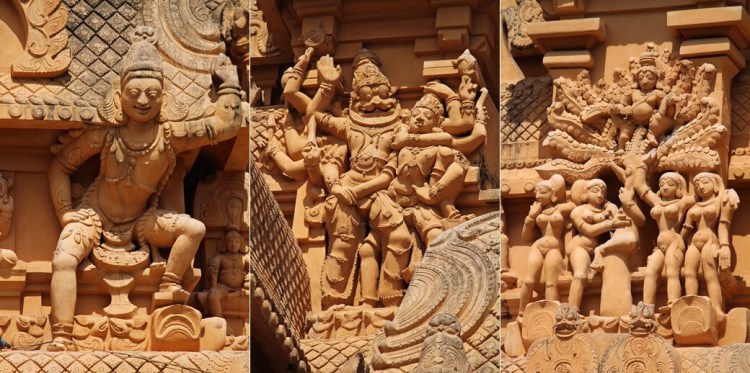
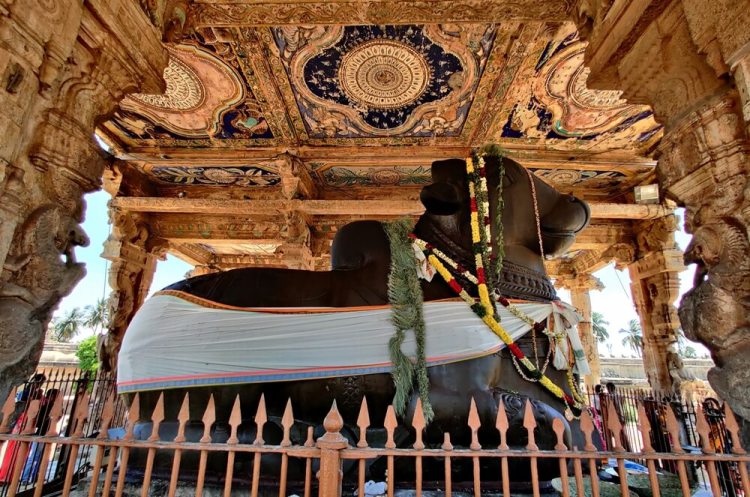
Going ahead, there is the Nandi Mandapam which is the temple of the Nandi, the celestial mount of Lord Shiva. Its a huge monolithic statue carved on black stone. Adjacent to it is the Amman shrine, where Shakti, the consort of Lord Shiva is worshipped. This shrine also has beautiful stone carvings on the walls depicting Shaivite traditions.


In front of the Nandi Mandapam is the courtyard of the Brihadishvara temple. Large steps lead the devotees to an elevated pavilion which opens into a long pillared hall. It may be a long wait here on festive occasions but at the time I went, it was relatively less crowded which also allows an opportunity to explore hassle free and admire the exquisite stone carvings and colourful murals on the walls and the ceiling. The most popular of all murals is the painting of Raja Raja Chola with his guru Karuvurdevar showing the great emperor as an ardent disciple in a rather submissive pose in front of his guru. This is a beautiful depiction of the guru shishya parampara of ancient India. At the end of the hall is a mammoth door securing the sanctum sanctorum of the presiding deity – a huge shivalinga. There are other shrines dedicated to Lord Ganesha, Subramaniyam and the 108 shivalingas. Brihadishvara temple is accorded UNESCO World Heritage site status and the artworks and sculptures in the temple are well documented. Hiring an ASI guide to give a tour of the temple is a worthy consideration.
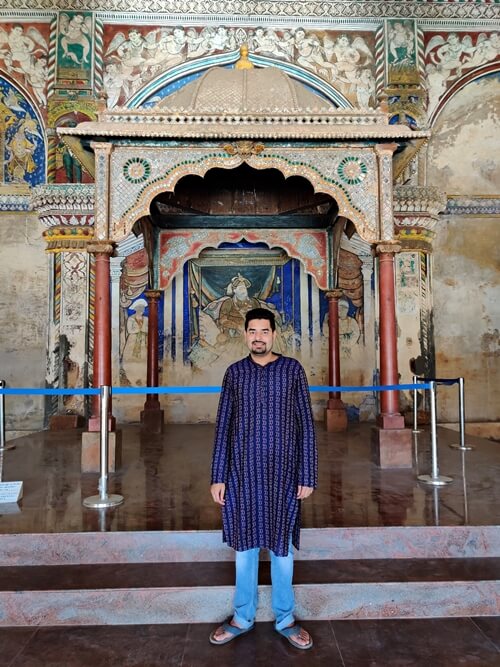
One must also visit the Thanjavur Palace which has an excellent collection of Bronze statues and stone sculptures along with many other artefacts from the medieval age. The Serfoji’s Memorial Hall Museum contains lots of regal artefacts – weaponry, headgears, parasols and a private collection including royal attires, utensils and furniture. There is a colourful Maratha durbar hall, a watchtower and a full body skeleton of a whale as well. The Saraswati Mahal library has the most elaborate collection of ancient Indian manuscripts inscribed on palm leaves in a wide range of Indian languages like Sanskrit, Odia, Tamil, Marathi, etc. Only a small portion of the entire collection is accessible for public viewing but this library is a treasure of Indian ancient literature. I will refrain from writing more about this place to keep this post short but this place is as historic and important as the temple itself and a must visit if you are interested in the rich legacy of medieval India away from the glamour of the Mughal monuments.



Thanjavur is often visited as part of the Tamil Nadu temple circuit which also includes other stunning temples like the Meenakshi Amman (Madurai), Rameshwaram, Thillai Nataraja (Chidambaram) and the Ranganathaswamy (Srirangam). All these temples are jewels of Indian history and if you are a connoisseur of fine temple architecture and Dravidian heritage, these are some must visit destinations. I hope you liked this post, please share your views in the comments section below.
 Jolly Miles
Leave a comment