
En route to Kasol, I met a fine gentleman in his mid-thirties who to use his own words “discovered the importance of travel late in his life.” He had set himself a target of visiting 12 places in North India in 12 months of 2022 and in the process make up for the lost years of his life. The thing that immediately enticed me about him was his resolve to visit places that were not the usual fancy ones but to seek experiences and connect with people and their traditions. He had recently returned from a trip to Kartarpur – a gurudwara inside the territory of Pakistan and was on board to experience the “Kullu Dusherra”.
Over the years of traveling, reading, and writing about travel experiences, I had a grasp of “things to do/see in different places across the country” but to my chagrin, “Kullu Dusherra” caught me off guard. I had never heard of it and was unaware of its grandeur. A quick Google search showed that Modiji, the Hon’ble PM of India was gracing the occasion this year. There was no way I could miss this.
I was travelling with my wife to Kalga, one of my favourite hamlets in the Himalayas. We planned to spend a couple of days in the mesmerizing Parvati valley and complete the popular Kheerganga trek. Now the itinerary had to be extended to accommodate a day or two in Kullu.
While we had a strong resolve to stay back and witness the festival, the challenge was to find a place to put up. The festival was being conducted in its full glory after a hiatus of a couple of years on account of Covid which topped by the presence of PM Modi and the whole state machinery that accompanies him on his tours made it tough to find any decent accommodation at the last minute. After hopping around for hours in search of any sort of accommodation for the night, we chanced upon a hotel right next to the Dhalpur Maidan where the festival was to be held. Apparently, someone had vacated the room due to some emergency and it was available till the noon next day. It was nothing sort of a boon to find a room somewhere so close to the ground just an evening before the festival. By now we were completely exhausted after sleeping in a tent the previous night, waking up early, trekking down for 4-5 hours, taking a bus to Bhuntar, another to Kullu, and finally searching for accommodation with 2 heavy rucksacks pulling us down. We dozed off and only woke up late in the evening.

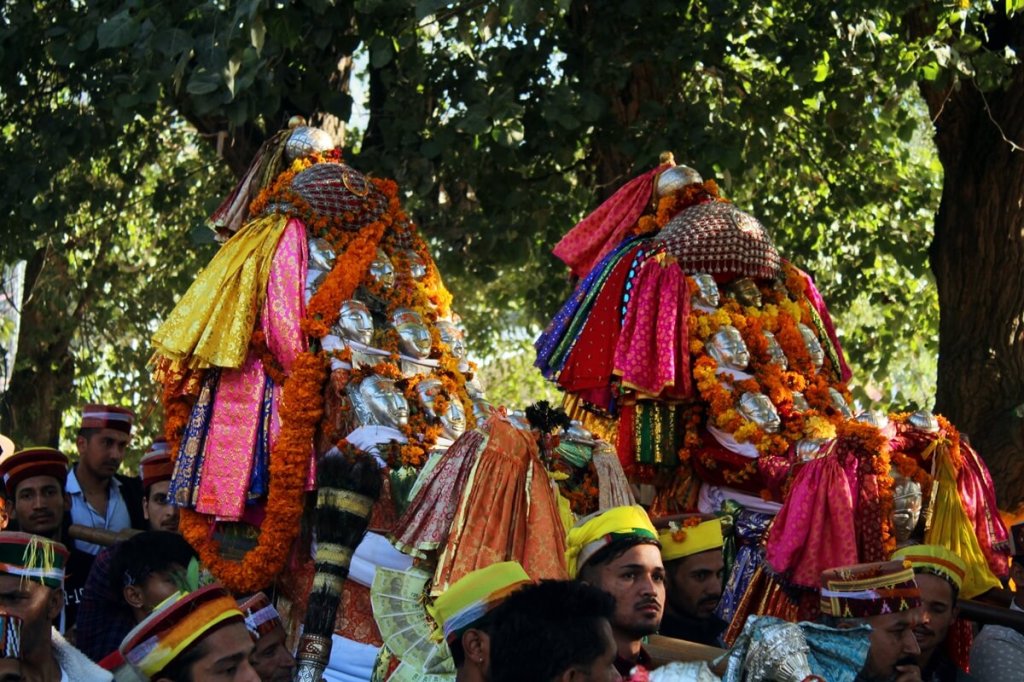
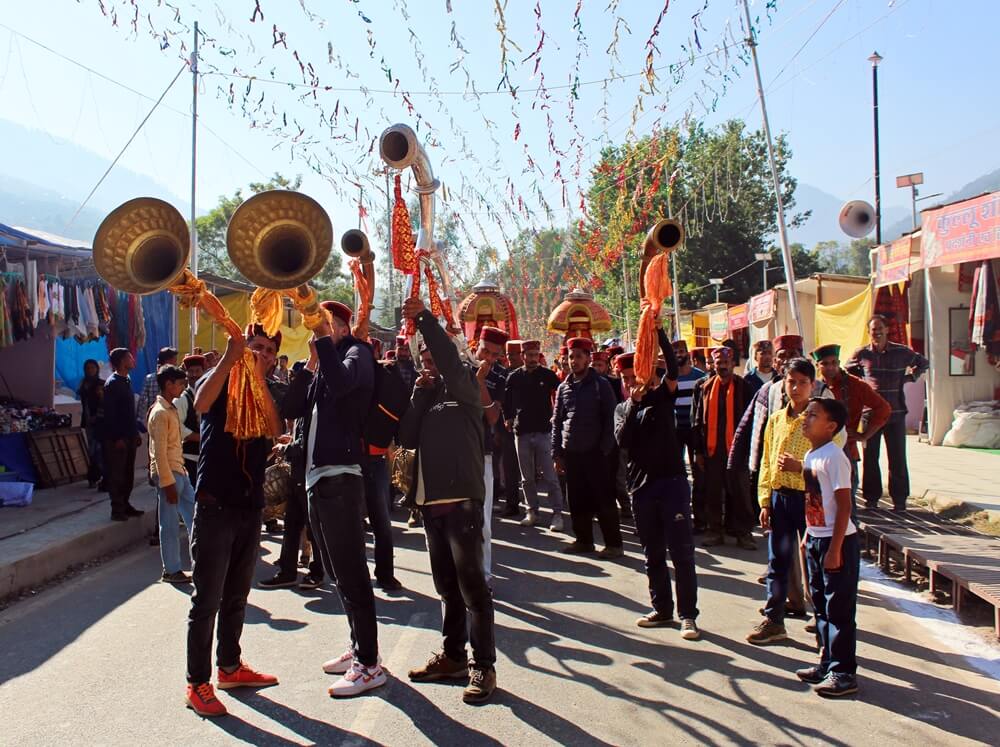
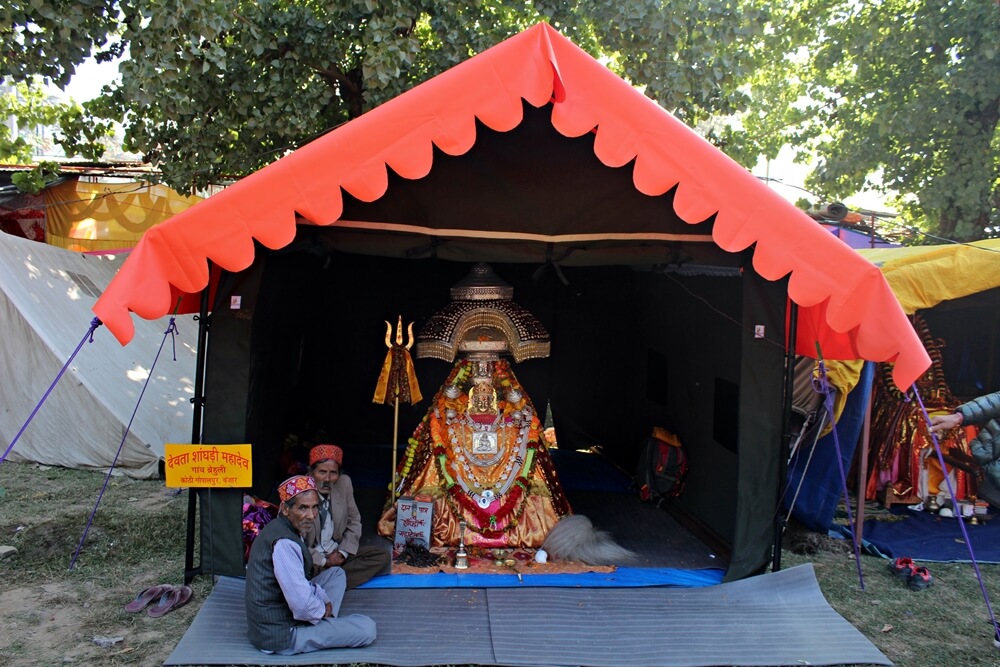
Kullu Dusherra dates to the 17th century when as a penance for the sin of killing a poor Brahman, Raja Jagat Singh of Kullu renounced his crown and placed an idol of Lord Raghunath on the throne. On the eve of Dusherra, all the deities from the nearby villages including goddess Hidimba from Manali and Bijli Mahadev are brought to the Dhalpur Maidan in elaborate processions who pay their respects to Lord Ram and accompany him in a famous Rath Yatra across the town. The deities started arriving from the evening on decorated palanquins adorned with jewelries and flowers. The palanquin bearers are accompanied by a procession of cymbals, drums, trumpets and firecrackers. Each deity is assigned a tent where they camp during the festival. The festivities continue for 7 days which are marked cultural events, feasting and lots of merriment between the villagers.
I believe, apart from the religious aspect, in the bygone years, the festival would have served as a get together for people in the Kullu-Manali-Kasol region. The villages in these terrains are scattered across mountains with limited connectivity between them. Dusherra seems to be the apt time for mingling just before the onset of the treacherous winter that wreathes the region with a blanket of snow confining the villagers to their own hamlets with limited resources to withstand the harsh winter. The festival would have served as a platform for trade, cultural exchanges and sharing of pleasantries until the next spring.


Over the years, this rudimentary cultural amalgamation has perhaps evolved into a large-scale festival with trade exhibition and cultural programs, witnessing a footfall of about 5 lakh visitors including the PM or India. In 1972, in an attempt to globalize the event, the state government accorded international status to the festival post which it is being referred to as the “International Kullu Dusherra”.
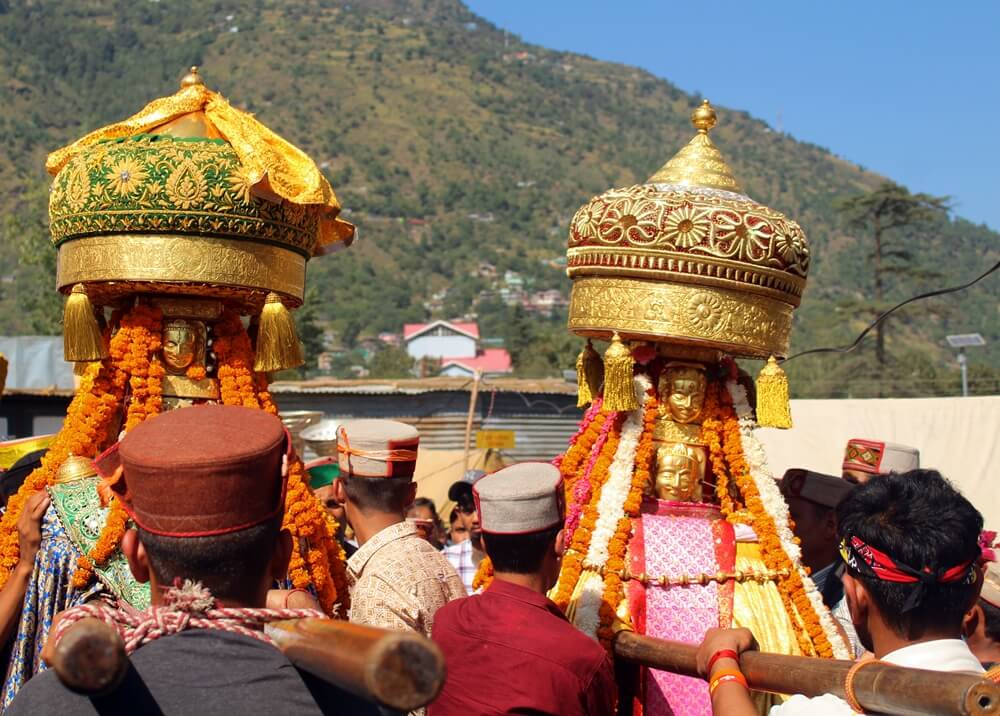

For us it was a really pleasing experience. Himachal Pradesh is called the Devbhoomi (land of Gods) and in this Dusherra festival witnessing over 200 deities from across the valley you understand why it is called so. We experienced a cultural potpourri of vibrant pahadi traditions, tasted the delectable siddu (a delicately prepared local dish) and got to walk with the chariot along with all the processions in what was a truly divine moment. I will use this post to thank Mr. Rakesh, the fine gentleman I mentioned in the beginning for initiating us to this experience without whom in spite of being so close, we would have missed a surreal cultural experience.
I hope you liked this post, please share your views in the comments section below.

 Jolly Miles
Leave a comment