
By the 1st week of July, monsoon firmly sweeps across India. Heavy rainfall leads to catastrophic floods and landslides. Travelling during this period is not a good idea and travelling to hilly terrains is a sure no go. However, Ladakh over the years has always remained a sunny spot during monsoons when dark clouds engulf landscapes in other parts of the country. Monsoon clouds rarely cross the high passes to the east of Kargil and north of Manali which has turned the Ladakh region into a desert, not the typical sandy ones like in Jaisalmer but a cold desert bereft of trees and plantations.
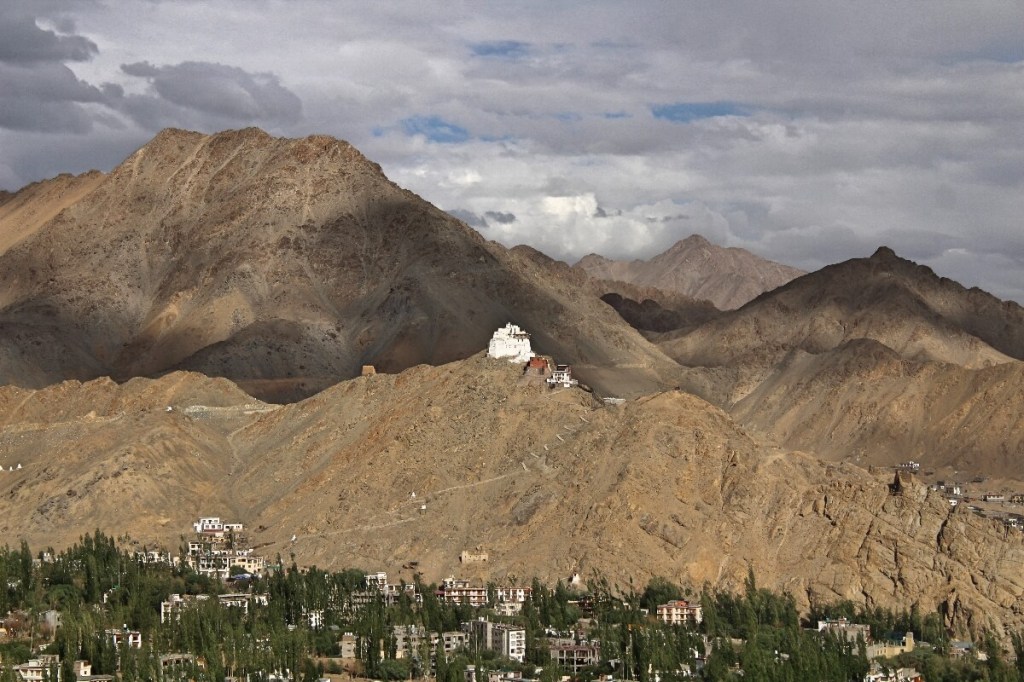
Monsoon was our primary consideration as well when we planned our trip. We were somewhat assured that rain won’t be an issue in Ladakh, although we have now travelled enough to know that mountains are unpredictable when it comes to weather; and it turned out so. The flight to Leh is a picturesque journey over the barren hills of Ladakh with patches of snow in July. When we landed in Leh, it was a bright sunny day with no trace of clouds. On the same day, Manali was lashed by heavy rains resulting in a devastating flood which swept away buildings and highways. The next day was bright but Google weather showed rainfall for the following 3 days. Talking to locals assured us that even if it rains, it won’t be anything more than a light drizzle. By the evening, while we were casually strolling through the main market of Leh, we experienced the first rain of the season in Ladakh. Anyone we spoke to had the same view – “this is Ladakh, it doesn’t rain here.”
As the night intensified, so did the rain, it went from a drizzle to shower to a down pour. The hills in Ladakh are loose, old houses are made up of mud and the landscapes are not used to incessant rains. People staring worrying; who have stayed here long enough remembered the catastrophic cloud burst which swept Leh in August 2010 resulting in over 250 deaths. By the morning, the rainfall debilitated but did not cease; it did not cease for the next 3 days. Leh is surrounded by high altitude passes, and rain means snow in these regions. All the passes were closed and we were basically confined to the Leh town with no where to go. What a waste!
With no where to go we decided to spend time with the locals of Ladakh. We had a contact of a bookshop owner in the Leh market who also had a side business of Pashmina shawls. We actually met him a year earlier in the crafts market of “Delhi Haat” when he came to participate in an exhibition. We found him an interesting person and exchanged numbers, just in case we meet in the future. We dialed him and became his guest. He was more delighted than us and even invited us to his house. The Ladakhi people are really warm and selfless. We kept meeting more people, a tour operator with whom we planned and later cancelled our Nubra Valley trip, a soldier who has served in the Ladakh Scouts, an antique shop owner, a jovial taxi driver; we were truly hooked by the conversations we had with them. We understood the Ladakh beyond its landscapes – its vibrant culture, Buddhist heritage, delectable dishes, festivals, old times, and a lot more.
The soldier we met shared us anecdotes of his days as a “Snow Leopard” (nickname for the Ladkah Scouts infantry regiment) in the Siachen glacier, the highest battlefield in the world. The antique shop owner, a Kashmiri by origin but Ladakhi by heart, told us about Padamsambhava, Tara and Tibetan Buddhism. We also bought a beautiful Thangka painting, a turquoise pendant and few antiques from him which will remain our prized possessions. The tour operator, Dadul bhai, a magnanimous person with whom we literally spend an entire day. He belonged to the Hanle region, popular for star gazing. He had spent his entire life in Leh and has seen it evolve from a small town to a bustling tourist spot. He had quite a few stories to share and nudged us to visit the old Leh area. We had some interesting conversations on wool processing and itars at Mira’s Emporium, a showroom in the Leh market with amazing collections and even better people. Finally, the food, we tried so many authentic Ladakhi dishes – Momo, Skyu, Chhutagi, Tingmo, Yak cheese, Khambir and the Kahwa & butter tea. Three days passed and we hardly regretted the rain.

We also had the opportunity to do things we would have skipped if the weather was clear. We walked from the Jama Masjid in the Leh market to the Leh Palace through mud trails passing through the backyards of the old settlements in Leh. We visited the Alchi Gompa, among the oldest monasteries in the region built between 958 and 1055. The monastery had wooden statues with murals dating back to thousand years. I would recommend anyone visiting Leh to include this place in their itinerary. On our way back we also visited the Likir monastery.

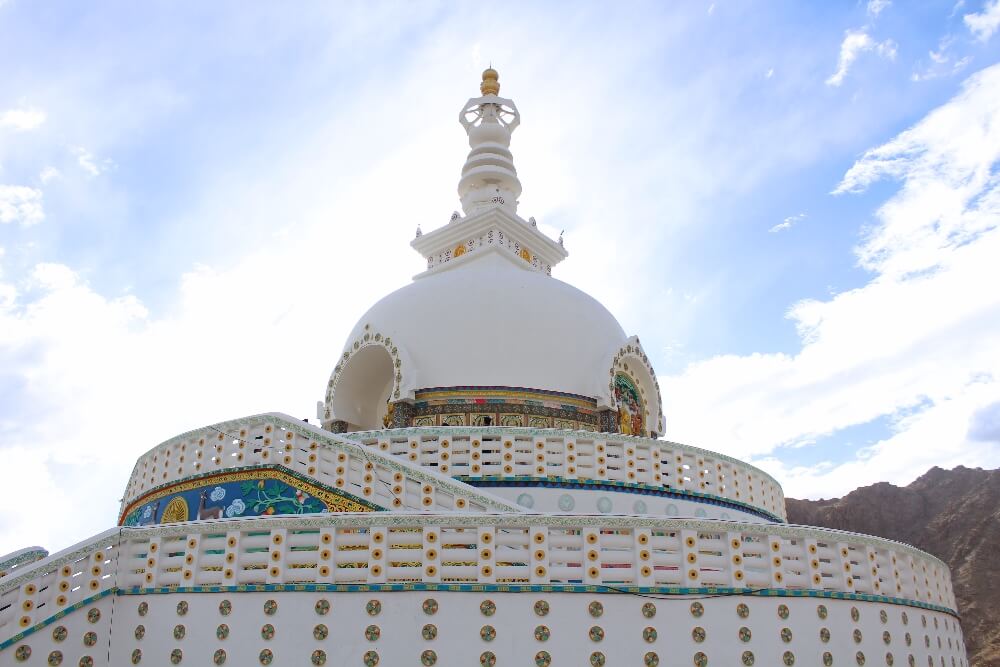
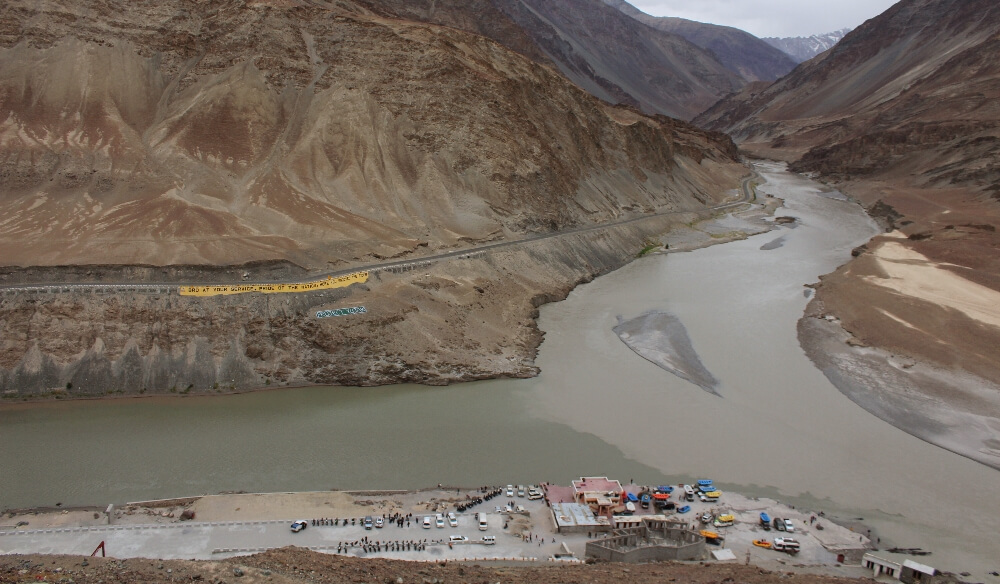
We had 2 sunny days in total, the day next to our arrival date and the day before our departure. On the first, we visited the the Magnetic hills, Sangam (confluence of Zanskar and Indus river), the Hall of Fame, Santi Stupa and the Spituk monastery (the landscapes from the roof of this monastery are surreal). On the last day we visited Khardung La (rain had turned this place and the route into a snow paradise), Thikshey Monastery and the Shey Palace. While we were not able to visit the popular points like the Hemis Gompa, Hunder, Nubra valley, Tso Moriri, Pangong Tso, etc., we have no regrets. Tourists points in Ladakh are dispersed across the hills and valleys which makes Ladakh trip a hectic one involving lots of travel. By not visiting these places we got a chance to experience the Ladakh which very few experience, the Ladakh beyond its landscapes.


Hope you liked this post. Please share your views in the comments section below. Travel and enjoy.

 Jolly Miles
Leave a comment