
Triund trek is an easy to moderate level trek to the Triund top located near the McLeod Ganj town in the Dharamshala district of Himachal Pradesh. The trek route offers stunning views of the enthralling Dhauladhar ranges of the Himalayas and is a popular trekking spot for beginners. While Triund attracts trekkers round the year, the experience of trekking through trails covered with snow is especially fascinating which makes it a popular winter trek.
The trek route can be easily covered both ways in a single day and not much preparation or past experience is required for the trek. All one needs is an adventurous heart, a good pair of shoes (all the more important in winters), a bottle of water and optionally a trekking stick.

I did Triund trek in the month of January just after the first snowfall of the season. Hiring a local guide is mandatory for trekking in the winter and there is a check point near the Gallu Devi temple to ensure that every group is accompanied by a guide. While this rule is in place to ensure safe return of the trekkers if it snows heavily or gets dark by the time you descend but the guide charges are high and if you are a solo trekker, it’s a huge expense. A local taxi driver told me the previous evening that if I could reach Gallu Devi by 8AM before the police arrives, I can do the trek without a guide. The trek path is clearly marked and its an easy trek which can accomplished without a guide. I thought it was worth taking the risk to save about 1500 rupees and decide to trek alone.
I reached Gallu Devi temple by 8 AM and had light breakfast at a small shop near the temple. I hired a taxi to drop me at the Gallu Devi temple; some trekkers also walk from McLeod Ganj to Gallu Devi temple which is around 7 kms through scenic oak forests. But it is advisable to take a taxi to Gallu Devi temple as it saves your time and also keeps you fresh for the main trek that starts from here. Should you decide to walk, there are two ways to reach Gallu Devi temple one through Dharamkot (this is the one that taxis take) and there is another steeper but shorter trekking route through Bhagsu.

The initial trek route is easy with little elevation. The valley is on the right side and you can get a bird’s eye view of the McLeod Ganj town from here. After hiking for some time, you can see beautiful views of the Dhauladhar ranges – pointed peaks with strides of snow against the clear blue sky is an enchanting sight. There are some sections where you need to be careful but overall, the first part is pretty easy and it will take 1 – 1.5 hour depending on your speed. If you don’t stop to rest or click pictures, you can reach faster but its better to enjoy the trek rather than simply rushing through it.

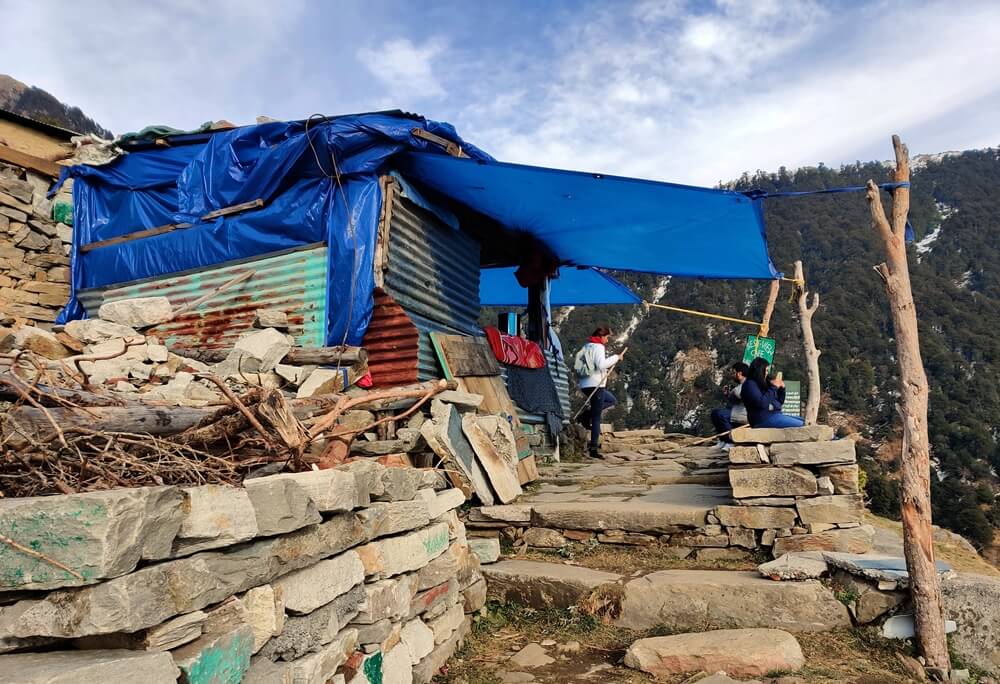
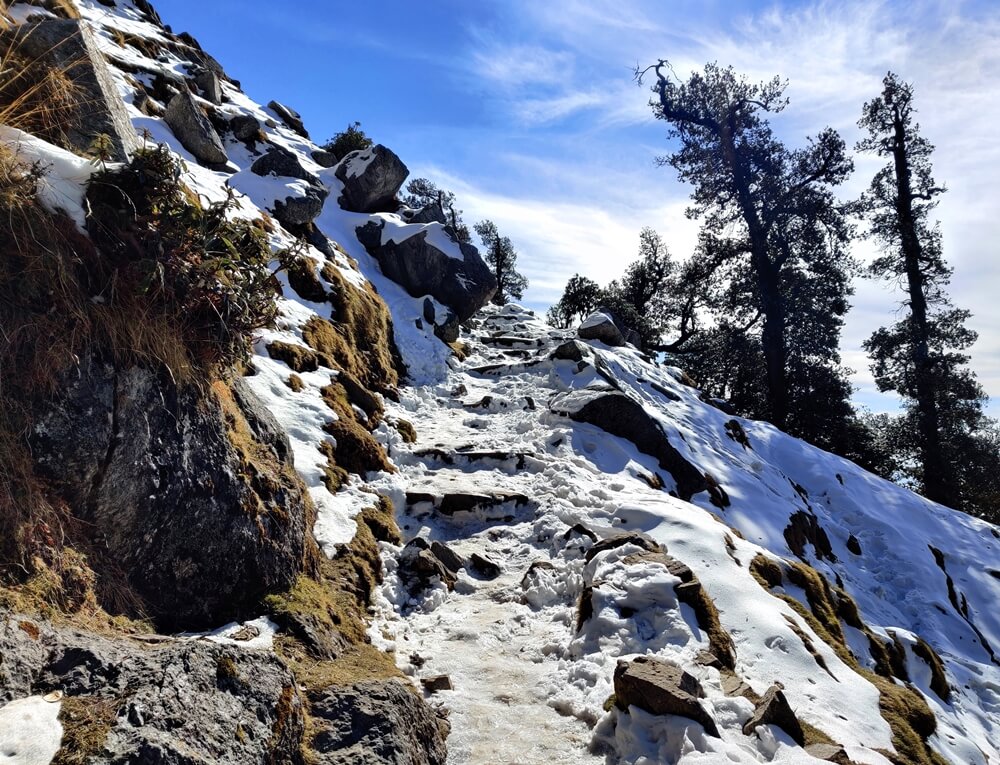
The next marquee point in the trek is the Magic View café. This is situated about half way to the peak and is a good pitstop to refresh, have some food, fill your bottles and prepare for the next phase. The real trek starts from here, the route becomes steep, lots of snow, the path is not clearly marked, and there are no safety barricades. While Magic View café is midway, reaching the peak may take about twice the time as reaching Magic View café from Gallu Dev temple. The second part, though tiring is quite scenic wit pristine views of the Dahuladhar ranges and the Kangra valley. Climbing through the snow is difficult especially if you are not wearing the right shoes, it is common to lose footing and slip which can be dangerous if you are not careful. One tip is to put you foot on fresh snow which allows more grip that the hardened surface. The second phase is tiring and as you go up, the temperature dips and the cold winds crash against your face and ears. The final 500-700 meters of the trek is very steep and by the time you reach there you are already enervated. People without trekking experience may find this part challenging and would require frequent breaks to push forward.

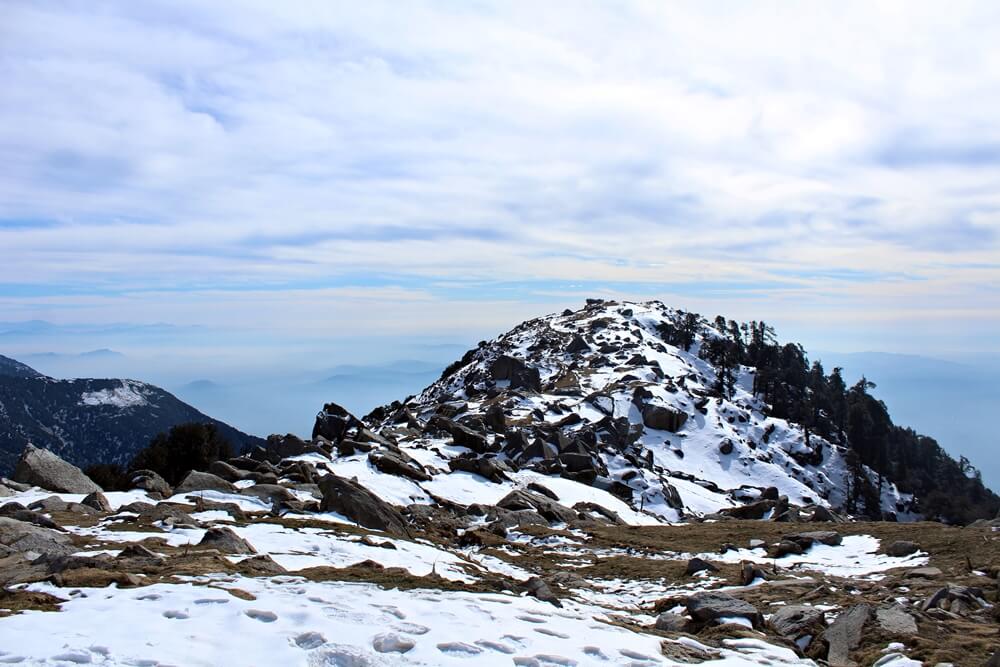
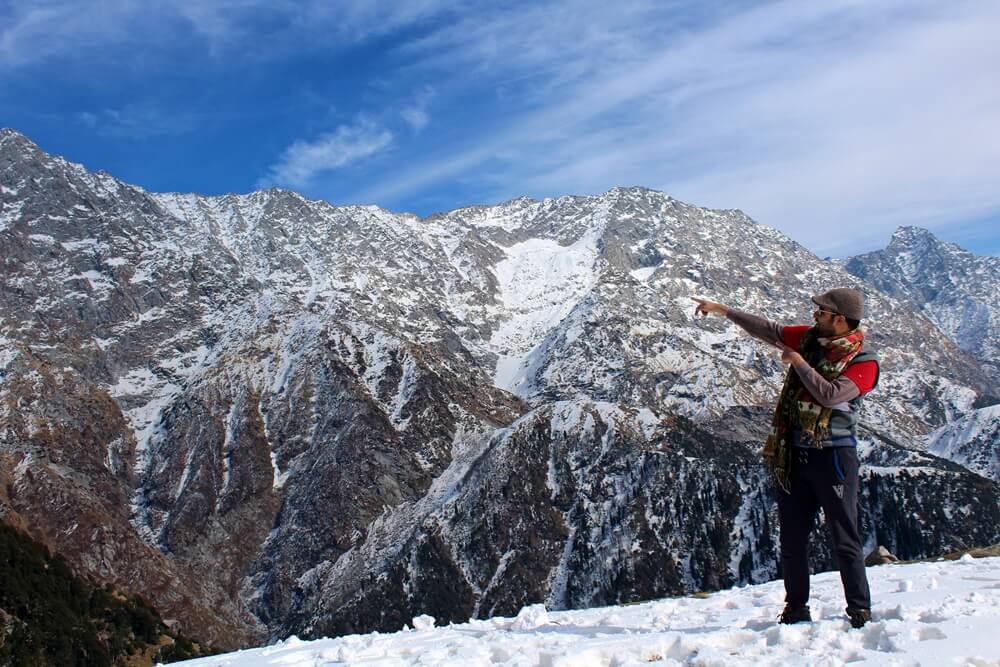
The peak appears all of a sudden and the first glimpse of it is enough to compensate for all the pain that one has to endure to reach here. On one side is the white Dhauladhar range and on the other side is the greenery of the beautiful Kangra valley. After all the hard work, watching the snow-covered peaks, expansive views of the Himalayas and bird’s eye view of the valley; Triund feels like heaven. Himachal Pradesh is replete with trek routes and I have done a few but no other one-day trek can match the beauty of the Triund peak, it’s amazing. There are further trek routes to the Lahesh cave and Indrahar pass from Triund but those are for professional trekkers and takes 3-4 days to complete.


Much like the ascent, the descent is also tough in the initial part and one has to be extremely careful – it is always tough to climb up but dangerous to climb down. After the initial phase, it’s an easy way back. The descent may take anything between 1.5-2 hours at normal speed. For anyone who has never trekked in the Himalayas before, Triund is a good start and worthy of giving a try irrespective of past trekking experience and fitness; worst you won’t make it to the peak and return midway but hey, there are many who don’t reach the peak and its absolutely OK.
Here is a short video that I made of the trek. Hope you like it.
Trekking is always thrilling and doing a snow trek in the winter is guaranteed to give you some lifetime memories to cherish. I hope you liked this post, please share your feedback and let me know about your experience of Triund in the comments section below. Travel, Learn and Love!


 Jolly Miles
Leave a reply to Olympus Mountaineering Cancel reply